Ray Peat
Raymond Franklin Peat (1936-2022) was a biologist, philosopher, and painter, with a primary interest in nutrition, aging, and hormones.
| Raymond Franklin Peat | |
|---|---|
.jpg&filetimestamp=20251117005719&)
| |
| Born | October 12, 1936, Santee, California, U.S. |
| Died | November 24, 2022, Eugene, Oregon (Aged 86) |
| Nationality | American |
| Education | Ph.D. in Biology (1972) University of Oregon |
| Occupation | Biologist, nutritionist, author, painter |
| Known for | Hormone, aging and bioenergetic research. |
| Notable works | Papers in Physiological Chemistry and Physics (1971–1972) Dissertation: University of Oregon (1972) |
| Website | https://www.raypeat.com/ |
Early Life
[edit]Raymond Franklin Peat was born on October 12, 1936, in Santee, California, to Sidney Howe Peat[1] and Lou Ella Osborne. Shortly after the end of World War II, his family relocated to Oregon, where he spent the remainder of his childhood.[2]
Education and Career
[edit]Ray attended Grants Pass High School from 1950 to 1954, where he played in the orchestra and was nicknamed "Half-Pint". He began his college education at Southern Oregon University in 1955, completing his sophomore year before transferring to the University of Oregon, where he earned a Bachelor of Arts in humanities in 1958. Peat pursued graduate studies at Ohio State University from 1959 to 1960, obtaining a Master of Arts with a thesis titled "William Blake and the Mysticism of Sense and Non-Sense."[3] He returned to the University of Oregon and completed a Ph.D. in biology in 1972, with a dissertation on age-related oxidative changes in the hamster uterus. After earning his doctorate, Peat taught at several institutions, including the University of Oregon, Urbana College, Montana State University, National College of Naturopathic Medicine, Universidad Veracruzana, the Universidad Autonoma del Estado de Mexico, and Blake College. In 1968, Peat traveled to Moscow in an effort to meet the biologist Trofim Lysenko, who, it turned out, had gone on vacation. Peat instead met with Lysenko's assistant, who provided him with numerous references and studies.
In the 1970s, Peat conducted research on hormones and aging, focusing on the roles of progesterone, thyroid, and cellular energy in health and disease. He later became known for his independent research and writings on nutrition, metabolism, and endocrinology, emphasizing the protective effects of sugar, saturated fats, aspirin, coffee, coconut oil, red light, and certain hormones such as pregnenolone, progesterone, thyroid, and DHEA against stress and degeneration. Peat published dozens articles, authored five books, gave radio interviews, maintained a website sharing his ideas and answered thousands of emails until his death.
Blake College
[edit]
Ray founded Blake College[5] in 1962 in Valle De Bravo, Mexico, as an independent liberal arts school focused on student-directed learning and academic freedom. Peat traced the model to reading about Bertrand Russell and Dora Russell's Beacon Hill School in the 1920s, which led him to the University of Wisconsin's Experimental College under Alexander Meiklejohn and to Black Mountain College.[6] The college emphasized "teaching how to invent knowledge and solve problems," reflecting a critique of rigid U.S. academic structures. The college attracted highly gifted students, and in a May 7, 1963 letter to Bertrand Russell, Ray wrote that "the average IQ of students is now well over 145."[7] In 1965, the college was shut down by the Mexican federales following accusations from activist Madalyn Murray O'Hair, who claimed the college was involved in drug trafficking. Authorities raided the school, citing items like a veterinary syringe and vitamin vials as evidence, though no charges were substantiated. Students were deported, and Peat moved to Montana to teach linguistics. Peat reopened Blake College in 1966 in Eugene, Oregon, near Skinner's Butte. The program centered on theoretical discussions of learning, creativity, and consciousness, with public lectures on topics including William Blake, biochemistry, nutrition, humanities, and existentialism. Despite efforts to gain accreditation, the college faced opposition from Oregon education officials and closed by 1975 when Peat left.
Death
[edit]Raymond Peat passed away peacefully at his home in Eugene, Oregon, on November 24, 2022, at the age of 86.[8]
Landshark wrote an obituary for Peat in IM—1776, describing his synthesis of Soviet and American biology with classical and folk traditions, and citing Metchnikoff, Pauling, Gilbert Ling, Leibniz, and Heraclitus among his influences.[9]
Danny Roddy devoted several episodes of his podcast to remembering Peat: a call-in show with Georgi Dinkov recorded shortly after his death,[10] a same-titled episode released a year later,[11] and a 2024 livestream retrospective with Nick Stumphauzer.[12]
Published Works
[edit]- "William Blake and the Mysticism of Sense and Non-Sense" (1960), Peat's Ohio State master's thesis.
- "Age-Related Oxidative Changes in the Hamster Uterus" (1972), Peat's University of Oregon doctoral dissertation.
- "Mind and Tissue: Russian Research Perspectives on the Human Brain" (1976), a survey of Soviet brain research with introductions by psychologists Stanley Krippner and Peter Marin.[13]
- "Nutrition for Women" (1981), a practical nutrition guide built around salt, saturated fat, and avoiding polyunsaturated fats.[14]
- "Progesterone in Orthomolecular Medicine" (1993), arguing for progesterone's generality across steroid functions and its opposition to estrogen.[15]
- "Generative Energy: Restoring the Wholeness of Life" (1994), practical methods for solving health problems by increasing biological energy, framed through Vernadsky's biogeochemistry and self-ordering systems.[16]
- "From PMS to Menopause" (1997), a critique of hormone-replacement-therapy marketing that reframes estrogen, progesterone, and menopause management.[17]
Personal diet
[edit]Asked directly what he ate day to day, Peat described his own diet in an email exchange:
Normally, I usually have around 400 grams of carbohydrate. I have about 3 quarts of milk, varying amounts of orange juice (probably over a quart on average), eggs, and about 200 grams of meat or fish, with other things such as coca cola, cheese, ice cream, cheese cakes, some coconut oil and butter, occasional tropical fruit.
Philosophy
[edit]Peat's technical work sits on top of an explicit holistic philosophy, developed most directly in Generative Energy and Mind and Tissue. See Ray Peat's philosophy for the underlying ideas: energy and structure, Vernadsky's biogeochemistry, self-ordering cells, and Pavlov's brain research.
Patents
[edit]- “Treatment of progesterone deficiency and related conditions with a stable composition of progesterone and tocopherols.” (1984) [19]
- “Pharmaceutical compositions containing dehydroepiandrosterone and other anesthetic steroids in the treatment of arthritis and other joint disabilities.” (1986)[20]
Gallery
[edit]-
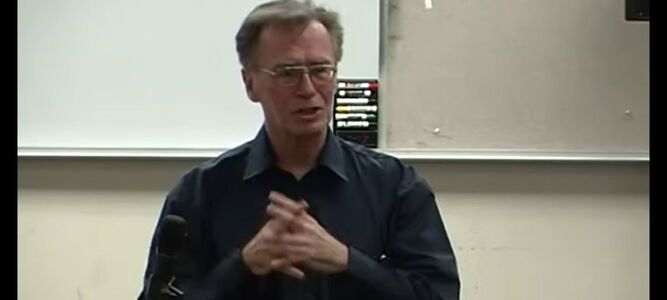 Ray, lecturing
 -
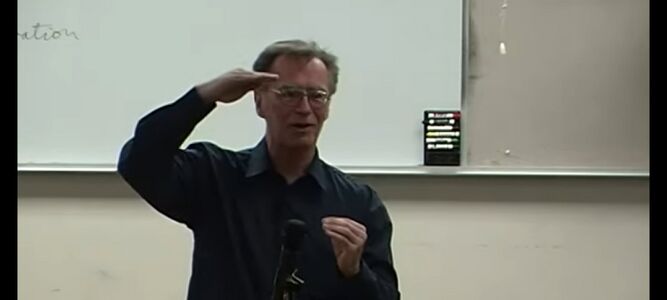 Ray, lecturing
 -
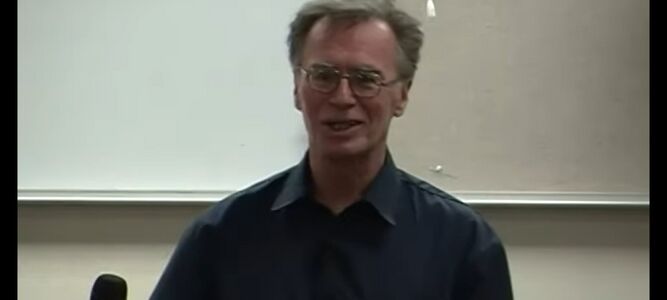 Ray, lecturing
 -
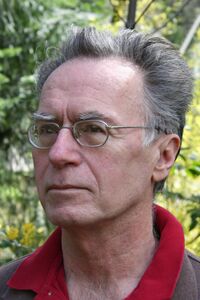 Ray, outdoor portrait
 -
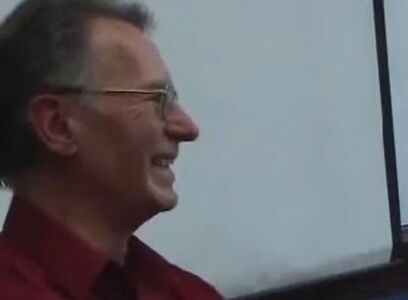 Ray, outdoors
 -
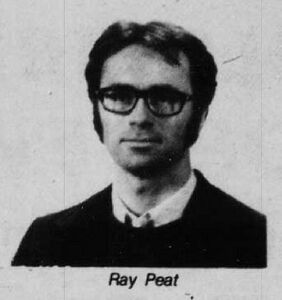 Ray Peat, yearbook photo
 -
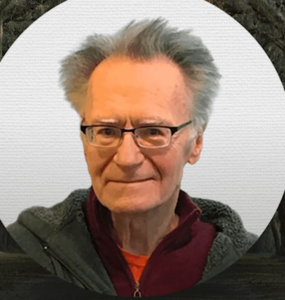 Ray Peat, portrait
 -
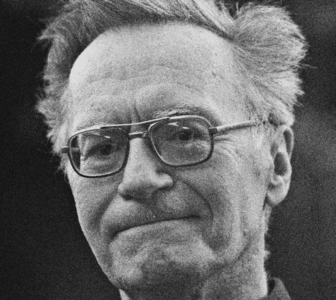 Ray Peat, portrait
.jpg&filetimestamp=20251117005117&)
.jpg&filetimestamp=20251117005145&)
.jpg&filetimestamp=20251117005217&)
.jpg&filetimestamp=20251117005817&)
.jpg&filetimestamp=20251117081530&)
.png&filetimestamp=20251117081638&)
.png&filetimestamp=20251117081733&)
On the Back of a Tiger
[edit]-
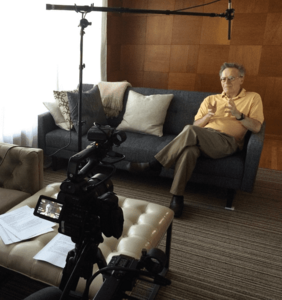 Day one
 -
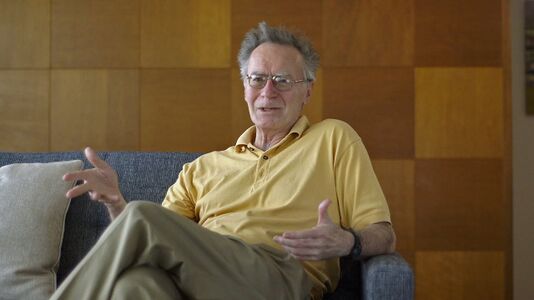 Day one
 -
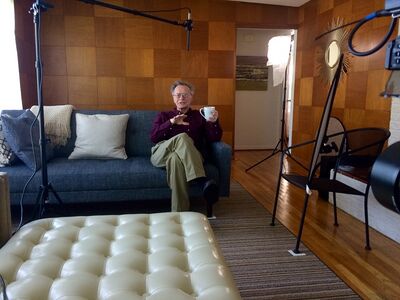 Day two
 -
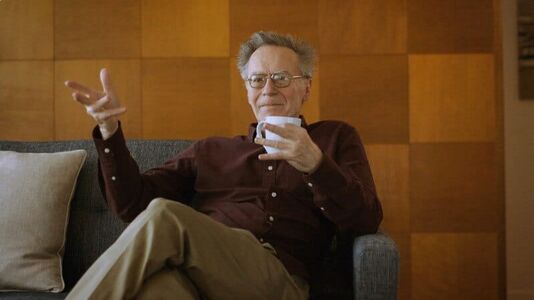 Day two
 -
 Ray, sketching outdoors
 -
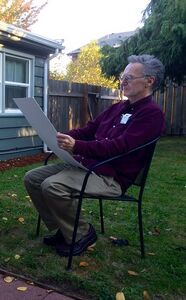 Ray, painting a portrait
 -
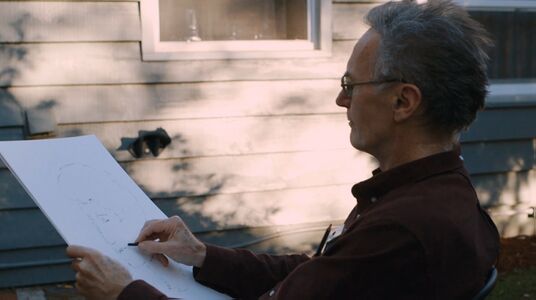 Ray, sketching outdoors
 -
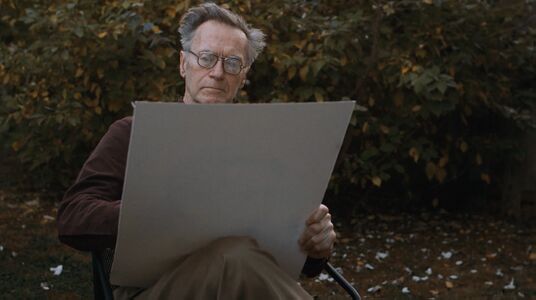 Ray, sketching outdoors
 -
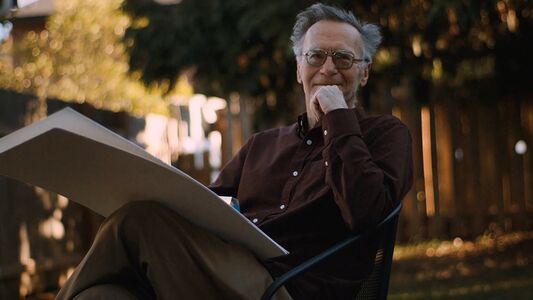 Ray, sketching outdoors
 -
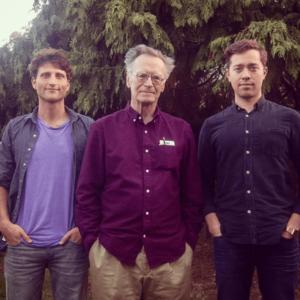 Ray, with interviewers
 -
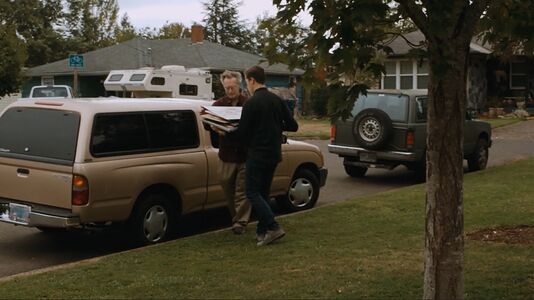 Ray, carrying paintings to a truck

.jpg&filetimestamp=20251117002840&)
.jpg&filetimestamp=20251117002929&)
.jpg&filetimestamp=20251117003006&)
.jpg&filetimestamp=20251117004754&)
.jpg&filetimestamp=20251117004837&)
.jpg&filetimestamp=20251117004927&)
.jpg&filetimestamp=20251117004955&)
.jpg&filetimestamp=20251117005032&)
.png&filetimestamp=20251117005537&)
.jpg&filetimestamp=20251117005638&)
In Mexico
[edit]-
 Ray, in an orchard
 -
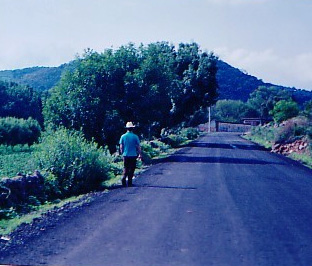 Ray, walking a rural road
.jpg&filetimestamp=20251117003056&)
.jpg&filetimestamp=20251117003133&)
Junction City High School
[edit]-
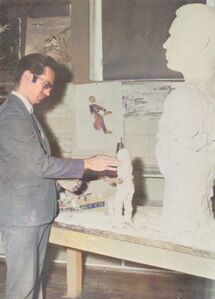 Ray, teaching art at Junction City High School
 -
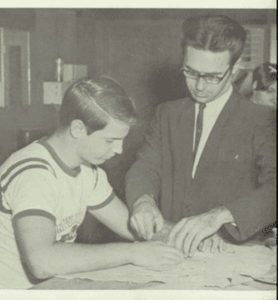 Ray, teaching art at Junction City High School
.jpg&filetimestamp=20251117003327&)
.png&filetimestamp=20251117003414&)
See also
[edit]References
[edit]- ↑ Sidney Howe Peat (1897-1974), FamilySearch.
- ↑ "Ray Peat: A Chronological Timeline", t3uncoupled.substack.com.
- ↑ "William Blake and the Mysticisms of Sense and Non-Sense", ScholarsBank, University of Oregon.
- ↑ Blake College photograph, UNT Digital Library.
- ↑ Ray Peat, "About Ray Peat," raypeat.com.
- ↑ Ray Peat, "Butter Living Podcast: A Casual Conversation with Ray Peat", Butter Living Podcast, 2:25
- ↑ Ray Peat, letter to Bertrand Russell, May 7, 1963, in "Ray Peat's Correspondence with Bertrand Russell."
- ↑ Find a Grave, Raymond Franklin Peat.
- ↑ Landshark, "Ray Peat, Obituary," IM—1776, December 14, 2022.
- ↑ Danny Roddy, "Generative Energy #90: Remembering Ray Peat Call-In Show with Georgi Dinkov", Generative Energy podcast, December 3, 2022
- ↑ Danny Roddy, "Generative Energy #104: Remembering Ray Peat Call-In Show with Georgi Dinkov", Generative Energy podcast, December 22, 2023
- ↑ Danny Roddy, "Remembering Ray Peat (2024)", YouTube livestream
- ↑ Ray Peat, "Mind and Tissue", p. 1
- ↑ Ray Peat, "Nutrition for Women", p. -4
- ↑ Ray Peat, "Progesterone in Orthomolecular Medicine", p. 2
- ↑ Ray Peat, "Generative Energy", p. 1
- ↑ Ray Peat, "From PMS to Menopause", p. 1
- ↑ Diet (General), Ray Peat Email Q&A, raypeatemails.com.
- ↑ US Patent 4,439,432, Google Patents.
- ↑ US Patent 4,628,052, Google Patents.