Roadmap/03 - Diet
Diet
[edit]Just eating what you consider to be the most delicious food can greatly help the intestine secrete more juices so things digest faster and move along more smoothly
Any craving is a good starting point, because we have several biological mechanisms for correcting specific nutritional deficiencies. When something is interfering with your ability to use sugar, you crave it because if you don't eat it you will waste protein to make it.
Food as metabolic fuel
[edit]The goal: high oxidative metabolism
[edit]The idea is to focus on metabolically supportive foods: Avoid stressors (e.g., PUFAs, anti-nutrients); prioritize easy-to-digest, nutrient-dense options. Balance macros, eat mixed meals (protein + carbs + fat for more complete absorption). Balance macros (50% carbs, 25% protein/fat adjustable). Drink according to thirst, transition gradually, especially from restrictive diets.
Use recipeats.org for meal ideas and recipes.
Here's an example Grocery list
Ratios
[edit]Keep a positive Calcium to Phosphorus and Glycine to Tryptophan ratio
Frequency
[edit]Having smaller meals more frequently tends to keep the digestive system working well, thus raising the metabolic rate. Avoid fasting or skipping breakfast, which downregulates metabolism by raising the stress hormones.
Macros
[edit]Tolerance varies by individual and dietary heritage (people of Asian descent, for instance, often handle starch better than others), but this mostly runs one direction, ripe fruit and juice, milk, and eggs remain the most broadly digestible foods for nearly everyone. Judge what works by digestive regularity, mood, energy, sleep, and temperature and pulse rather than following any rule rigidly. For many people, roughly carbs > protein > fat by amount, and about twice as much carbohydrate as protein with as little fat as needed, works well.[3] "As little fat as needed" isn't arbitrary: see Randle cycle for why running high carbohydrate and high fat together clashes metabolically, competing for the same oxidative pathway rather than adding cleanly.
The proportion of proteins, carbohydrates, and fat, it probably should be something like a third of each, but I'm not sure what the ideal is. It depends so much on the quality of each of them. Avoid starch, and avoiding eating polyunsaturated fats, and avoiding the very high tryptophan-content proteins... then you could go very high on any one of the major nutrients without problem.
— Ray Peat
| Carbs | Protein | Fat |
|---|---|---|
| Start with 200-300 g carbs | When sedentary: 60 - 80 grams | When sedentary: 40-50 g |
| Increase incrementally if more calories are needed | When lifting or physically active: ~100g | When lifting or physically active: Increase according to satiety
Limit PUFA intake to less than 3 grams/day |
Tracking food intake with Cronometer is extremely useful in getting an overall picture of daily micro and macro intake, and sometimes tracking only for about a week is enough.
High carb diet might sound counterintuitive, but it significantly increases tissue response to T3[4]
Eliminating starches, most fibers, and gluten can be useful to start with.
For people with really sensitive intestines or bad bacteria, starch should be zero. Starch is less harmful when eaten with saturated fat, but it's still more fattening than sugars.
— Ray Peat
Eating saturated fats, the carrot salad, coffee, carbonated beverages, prioritizing sunlight, eating a moderate protein (with gelatin intake being 20-30 grams) and a high carbohydrate diet that includes eggs (choline/vitamin A), shellfish/liver, reducing muscle meats consumption due to their high iron and tryptophan content, lowering starch intake and limiting PUFA, eating simple sugars, supplementing aspirin, baking soda, vitamin E and K2, thiamine, and limiting alcohol intake can all be helpful.
Start with a raw carrot salad on an empty stomach, even just eating a carrot will have an effect. Aim for roughly 0.7-1 g of protein per lb of bodyweight, prioritizing shellfish, dairy, liver, gelatinous meat, gelatin powder, and eggs.
See Vegetarianism for a vegetarian-specific version of this approach.
Nutrients, their role, and food sources
[edit]| Nutrient | Role and Effects | Food Sources |
|---|---|---|
| Calcium | Suppresses PTH and inflammation and supports metabolism. | Milk, cheese, eggshell calcium |
| Cholesterol | Raw material for sex hormones. | Egg yolks, liver, milk, cheese |
| Magnesium | Synergizes with calcium and reduces inflammation. | Coffee, milk, orange juice |
| Potassium | Facilitates glucose uptake and exhibits an insulin-like function. | Fresh orange juice, ripe fruits |
| Selenium | Required for thyroid hormone metabolism and immune function. | Eggs, beef liver, oysters |
| Sodium | Supports the metabolic rate and lowers the stress hormones like adrenaline. | Salt (canning/pickling salt preferred) |
| Vitamin A | Supports the production of pregnenolone and sex hormones; anti-estrogen; protein sparing. | Liver, egg yolks, milk |
| Vitamin B3 (Niacinamide) | Works with glucose and thyroid hormone to repair cells and tissues. When one of these energy-producing factors is lacking, the changes in cell
functions – a sort of pre-inflammatory state – activate corrective processes. |
Beef Liver |
| Vitamin B1 (Thiamine) | Cofactor in glucose metabolism and brain/nerve protective. | Orange juice, pork. |
| Vitamin B6 | Supports amino acid metabolism and serotonin regulation. | Liver, egg yolk, milk |
| Vitamin C | Major component for transforming cholesterol into bile acids. | Pulp-Free Orange Juice |
| Vitamin D3 | Enhances calcium absorption, modulates serotonin, and prolactin. | Sunlight (UVB rays), supplementation, Beef liver/Egg Yolk/Goat's Milk |
| Vitamin E | Antagonizes estrogen and prolactin, protects against iron and PUFA overload. | Egg yolks, liver |
| Vitamin K2 | Anti-estrogenic, activates vitamins A and D, improves calcium utilization and bone strength. | Liver, egg yolks, /Gouda 13 weeks+, Edam/Maasdam 5 weeks+, Raw Milk Cheese, etc./Natto. |
| Zinc & Copper | Essential for thyroid hormone conversion and activation of mitochondrial enzymes. | Oysters, liver, shrimp |
-
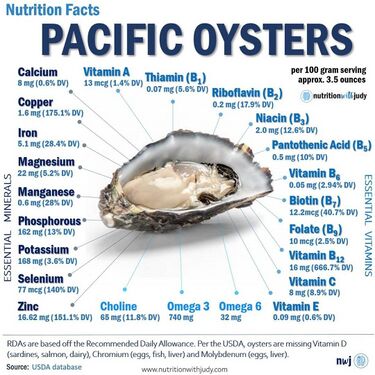 Pacific oyster nutrition facts
 -
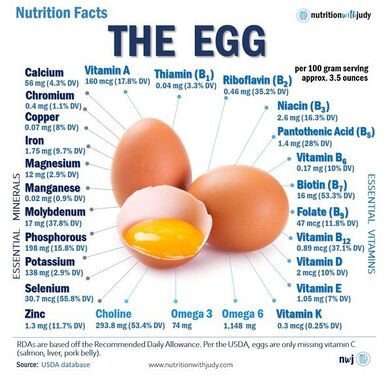 Egg nutrition facts
 -
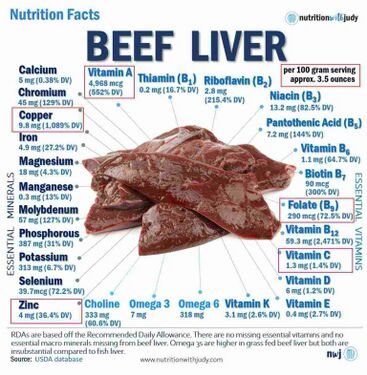 Beef liver nutrition benefits


The foundational foods
[edit]Milk and dairy: the calcium-to-phosphorus ratio
[edit]The obesity epidemic that began about 40 years ago in the US has paralleled the decreasing milk consumption. Studies in both animals and humans have shown that a moderate increase in calcium and vitamin D reduces obesity and increases the metabolic rate.
Adele Davis talked about that in the 1950s, that people think of calcifying kidneys and arteries and such and are afraid of the calcium in milk, but she already pointed out the research showing that the people who drink the least milk or have the least calcium in their diet have the most kidney stones and the most calcified arteries.
Compared to plant milks, lactose itself has a direct effect on improving mineral metabolism; treating milk with lactase enzyme to make it more tolerable also reduces its effect on helping absorb magnesium and calcium, so a lactose-free substitute gives up some of milk's mineral benefit along with the lactose.[5]
See: Calcium-to-phosphorus ratio
Fruit and orange juice: fast, clean energy
[edit]Orange juice provides an antiinflammatory, antioxidant, antiestrogenic effect on top of its sugar content.[6] Watermelon is a good alternative when orange juice isn't available. Having fruit with meat improves protein assimilation, letting less protein do more.[7]
Eggs and shellfish: nutrient density
[edit]Oysters provide iron along with the copper and other trace minerals needed to use that iron safely, a better way to correct low iron and hemoglobin than an iron supplement.[8] Shellfish (oysters, shrimp, squid) supply trace minerals that are easy to miss on a limited diet, and a few eggs a week fill in the rest; a quart of milk has about 32 grams of protein, an egg about 6.[9]
The carbohydrate question
[edit]Sugar vs. starch
[edit]Fructose inhibits the stimulation of insulin by glucose, so this means that eating ordinary sugar, sucrose, in place of starch, will reduce the tendency to store fat. Eating complex carbohydrates, rather than sugars, is a reasonable way to promote obesity.
This may sound counter-intuitive, but starch and glucose efficiently stimulate insulin secretion, and that accelerates the disposition of glucose, activating its conversion to glycogen and fat, as well as its oxidation. Fructose inhibits the stimulation of insulin by glucose.
Research shows that in the regulation of dietary fat intake the fact should not be neglected that a low fat diet is usually a high carbohydrate diet, and that the interaction of carbohydrate and fat metabolism is subject to adaptive changes.[11]
Fructose and liver glycogen
[edit]Relatively little glucose is stored in the tissues as glycogen, and when stress or fat gain reduce the ability to oxidize sugar, the body shifts toward burning circulating fatty acids instead. Fructose bypasses the point where fatty acids block glucose from being used, continuing to supply pyruvic acid for oxidative energy production even when glucose oxidation is blocked.[12] The liver has the highest capacity for metabolizing fructose but isn't the only organ that does.[13]
Practical carbohydrate sources
[edit]When money for food is limited, potatoes are a better staple than beans or oats. New potatoes are less starchy and less likely to cause digestive irritation than old ones.[14] Well-cooked starch eaten with fat is safe for most people, but a fair part of daily carbohydrate should still come from sucrose, fructose, and lactose rather than starch alone.[15]
Protein strategy
[edit]The tryptophan-serotonin problem
[edit]The fatigue produced by over-training is probably produced by a tryptophan and serotonin overload, resulting from catabolism of muscle proteins and stress-induced increases in serotonin.
On a tryptophan-poor diet, the amount of serotonin in the brain decreased. When brain serotonin decreases, the level of testosterone in male animals increases.
Balancing muscle meat with gelatin
[edit]The glycine-to-tryptophan ratio
[edit]When only the muscle meats are eaten, the amino acid balance entering our blood stream is the same as that produced by extreme stress, when cortisol excess causes our muscles to be broken down to provide energy and material for repair.
When we eat animal proteins in the traditional ways (for example, eating fish head soup, as well as the muscles, or head-cheese as well as pork chops, and chicken-foot soup as well as drumsticks), we assimilate a large amount of glycine and gelatin.
Practical application from Haidut: The dose that worked best was 15g 3 daily (45g total daily dose) for just 3 days. However, one of the groups consumed 5g 3 daily for 3 days and also experienced beneficial effect.
See: Glycine to Tryptophan ratio
Total protein vs. specific amino acid restriction
[edit]A 2026 review of over 350 studies found that restricting protein, or specifically restricting methionine, isoleucine, and other branched-chain amino acids, extends lifespan and improves metabolic markers across yeast, flies, rodents, and human trials, largely through elevated FGF21 signaling.[17]
This partly overlaps with the gelatin/glycine dilution strategy above; both approaches cut down on methionine specifically, rather than protein in general. This differs from a blanket recommendation to eat less protein overall: Ray Peat warned that under stress, a low-protein diet costs lean tissue rather than protecting it, since inadequate protein intake itself becomes a stressor that drives muscle catabolism. The reviewed studies restricting total protein were mostly done in animals under controlled, low-stress lab conditions, a different situation from a stressed human cutting protein to eat less of it.
Understanding fats
[edit]Why PUFA suppresses metabolism
[edit]A high n-3 PUFA diet lowers mitochondrial cytochrome oxidase activity, the enzyme thyroid activates and that drives oxidative energy production.[18] Keeping metabolic rate high, without calorie restriction, is itself what slows PUFA accumulation in tissue over time.[19]
Saturated fats and thyroid function
[edit]The short chain saturated fats... can compete against the polyunsaturated fats for producing oxygen in the mitochondria. The short chain saturated fats are anti-inflammatory and have many indirect helpful functions, but they provide energy so quickly that they block many of the actions of the polyunsaturated fats.
Coconut oil gives you a temporary reprieve while it's being digested for a couple hours after eating it. It interferes with that blocking system of the polyunsaturated fats.
Practical fat choices
[edit]Hydrogenated coconut oil is preferable to unrefined palm oil, which carries a PUFA load and, if pink-colored, oxidation products of its carotene content.[20] Butter, ghee, and beef tallow round out the saturated-fat options in the Substitutes table below.
PUFA depletion timeline
[edit]Simply avoiding new PUFA intake still leaves years of accumulated tissue PUFA to clear at an ordinary dietary fat intake, commonly cited as taking upward of four years. A 1959 study on monkeys found that a fat-free diet depleted serum and cholesterol PUFA within about four days, and tissue PUFA (muscle, skin, testis) fell to similarly low levels within 31 days.[21] A single high-PUFA meal afterward largely reversed the depletion, so a fat-free window only holds if followed by a genuinely low-PUFA diet, not one high-PUFA binge.[22] A separate human study found that keeping dietary fat below about 15% of calories (and especially below 3-4%) is what actually drives essential-fatty-acid depletion; smaller reductions in fat intake slow the process without preventing it.[23] This is a community-reported protocol, not one of Ray Peat's own published recommendations, and a sustained fat-free diet is not something to do indefinitely.
Meal timing and blood sugar
[edit]The nocturnal cortisol spike
[edit]Blood sugar falls at night, and the body relies on the glucose stored in the liver as glycogen for energy, and hypothyroid people store very little sugar. As a result, adrenalin and cortisol begin to rise almost as soon as a person goes to bed, and in hypothyroid people, they rise very high, with the adrenalin usually peaking around 1 or 2 A.M., and the cortisol peaking around dawn.
Why breakfast matters
[edit]After eating breakfast, the cortisol (and adrenalin, if it stayed high despite the increased cortisol) will start returning to a more normal, lower level, as the blood sugar is sustained by food, instead of by the stress hormones.
Eating frequency and stress
[edit]Small, frequent meals raise metabolic rate; single big meals favor fat storage instead.[24] Frequent meals matter most during hypothyroidism; once thyroid and liver function improve, 2 to 4 meals a day is enough, and the need for constant snacking drops as glycogen storage normalizes.[25]
Digestive health
[edit]Digestion, endotoxin, and gut repair get their own step, see Gut health, since they extend well beyond diet alone.
Substitutes
[edit]| Not Peaty (avoid / limit) | Peaty (prefer / substitute) |
|---|---|
| Seed oils (canola, soy, corn, safflower, sunflower) | Butter, ghee, coconut oil, palm kernel oil, beef tallow |
| Margarine / shortening | Heavy cream |
| Soy milk, oat milk, nut milks | Whole, low-fat or skim milk (cow, goat, sheep, and camel) |
| Industrial cheese (additives, colors, microbial or vegetarian rennet) | Animal rennet DOP cheeses, cottage cheese, ricotta, farmer’s cheese |
| Whole grains (brown rice, whole wheat, oats, bran, buckwheat[26], millet[27]) | Masa harina, sourdough white bread, potatoes (peeled & well cooked with fat) |
| Beans, lentils, chickpeas (high in antinutrients, poor protein quality) | Gelatin, bone broth, dairy, fruits, shellfish |
| Leafy greens (raw kale, spinach, chard – oxalates, goitrogens) | Cooked zucchini, mushrooms, bamboo shoots, raw carrots |
| Cruciferous (broccoli, cauliflower, cabbage – goitrogens) | Cooked squash, pumpkin, well-cooked root vegetables |
| Nuts/seeds (walnuts, almonds, flax, chia, peanut butter) | Fruits, dried fruits, fruit juice, gelatin snacks, macadamia nuts (have the fat composition of olive oil) |
| Fatty fish (salmon, mackerel – high in PUFA) | Lean fish, white and warmwater fish, oysters, shrimp, scallops, octopus. |
| Industrially raised pork / chicken fat (high in PUFA) | Ruminant fat: beef, lamb, bison |
| Soy products (tofu, soy protein) | Dairy protein (milk, cheese), gelatin, shellfish |
| Coffee on empty stomach | Coffee with milk + sugar (or honey) |
| Raw onions/garlic (gut irritating) | Cooked mushrooms, bamboo shoots, carrot salad |
| Commercial desserts (PUFA oils, gums, starch thickeners) | Homemade custards, ice cream (milk, sugar, yolk), fruit + gelatin |
| Soda with HFCS | Mexican coke, Orange juice, cane-sugar soda, fruit juice |
| Energy drinks (artificial sweeteners) (Monster, Bang..) | Redbull, Coffee with milk + sugar, honey water, juice + salt |
| Processed snacks (chips, crackers, PUFA fried foods) | Homemade potato chips (coconut oil), fruit + cheese |
| Starch (gelling, thickening, protein-stretching only) | Gelatin for gels/mousses; ~1 tbsp bloomed gelatin ≈ 1 egg for binding; 1 sheet ≈ 1 tsp powder |
| Baking powder (aluminum, additives) | Baking soda + acid: 1 tsp powder ≈ ¼ tsp soda + ½ tsp cream of tartar (or lemon juice); 1 tbsp ≈ ¾ tsp soda + 1½ tsp acid |
| Soy sauce | Coconut aminos (1:1)[28] |
| Buttermilk | 1 cup milk + 1 tbsp lemon juice or vinegar; rest 5–10 min |
| Mayonnaise | Yogurt or  Coconut oil mayo / Olive oil mayo Coconut oil mayo / Olive oil mayo
|
| Cumin, caraway (allergenic for many people)[29] | Turmeric, cinnamon, clove; black pepper sparingly if tolerated (Peat listed pepper among protective spices in normal amounts; heavy use adds oxalate load)[29] |
| Avocado (high total fat for a fruit)[30] | Coconut oil, olive oil (sparingly), fruit generally |
Not simple swaps: black/white pepper, chili, garlic, and onion are not one-for-one substitutes; reduce amounts, cook thoroughly, or omit. ReciPeats tags pepper as diet-yellow (community estrogenic caution); Peat's spice email still listed pepper among protective spices in typical culinary amounts, and noted black pepper is high-oxalate only if used heavily.
What to watch out as a newbie (Don't get fat)
[edit]- Many new "Peaters" make the mistake of assuming that eating lots of carbs and calcium will immediately speed up metabolism and allow weight loss, especially if they start with classic hypothyroidism symptoms (poor appetite, easy weight gain).
- If you have accumulated polyunsaturated body fat, you likely can't oxidize carbs efficiently, the initial priority is restoring oxidative (mitochondrial) capacity rather than immediately increasing calories or sugar.
- Most vitamins and minerals support glucose metabolism, so the focus should be on increasing nutrient density (plus sunlight) rather than just eating more calories/sugar.
- If starting out skinny-fat or chunky, stick to your current minimum maintenance calories and emphasize nutrient-dense foods only; do not calorie-max or sugar-max.
- Temporary thyroid or vitamin supplementation may be needed if fatigue prevents sticking to the approach.
- Example starting point: If your maintenance is ~1,200 calories/day, keep calories there but make every calorie nutrient-purposeful.
- Recommended foods/elements:
- Lots of cooked leafy greens (for magnesium)
- Charcoal, mushrooms, carrots (for gut health)
- Low-fat foods, gelatinous proteins, mineral-rich organ meats
- Avoid sugar-maxxing; instead, sip orange juice (OJ) between meals, it provides minerals, vitamins, and anti-inflammatory flavonoids beyond just sugar.
- Simple daily example for busy/lethargic people:
- This nutrient-focused approach (better Ca:P ratio, shorter insulin spikes, fructose, safety/abundance signals) promotes weight loss over time.
- End day with activated charcoal.
- Coming from keto/carnivore: your metabolism is likely under significant stress and carb-intolerant, don't jump straight to a high-carbohydrate diet. Reintroduce carbohydrates gradually and watch your energy levels as you go.[31]
- Signs of progress: waking up with real hunger and more energy for the first time.
- Use real hunger and actual weight loss as cues to increase calories, not appetite alone.
- Early on, the same calories may leave you hungry (instead of full/bloated/weak), curb extra hunger with small additions like hard cheddar, a carrot, or more sodium; don't overeat.
- Weight loss depends on calorie restriction relative to metabolic rate ,your old maintenance becomes your new deficit (ideal starting place if overweight); hold calories steady until weight loss occurs.
- As insulin sensitivity improves over time, very gradually increase calories.
- Long-term potential (6–12 months): tolerate 2,500–3,500 calories/day easily, with more muscle, less fat, higher energy, and better mental stability.
- Use coffee for regular bowel movements and to speed up bodily processes, but avoid heavy use until key nutrients are replenished (after years of hypothyroid "coldbrain" state).[32]
Peating outside of the home
[edit]Perfection isn't the goal away from home, avoiding the worst seed-oil sources and leaning on simple, recognizable foods covers most of it.
Restaurant
[edit]Steak, burgers without the bun, seafood, or a simple omelet are the easiest orders. Ask for butter or olive oil instead of an unnamed "vegetable oil" where possible, and skip the fried sides.
Family and social meals
[edit]Eat what's offered without turning it into a negotiation, one off-plan meal doesn't undo a baseline that's otherwise mostly milk, fruit, and simple protein. Bring a dessert or side you're comfortable with if you want a guaranteed safe option at the table.
Gas station and travel
[edit]Cheese, hard-boiled eggs, and fruit juice are the most widely available options. Chocolate milk or a milk-based coffee drink beats most packaged snacks.
Sick days
[edit]Orange juice, gelatin, and salt are the easiest things to keep down and support recovery. Keep meals small and frequent rather than forcing full meals.
Work and school
[edit]Make your own containers so you don't have to eat cafeteria food. Milk, fruit, cheese, and hard-boiled eggs travel well without refrigeration for a few hours.
Low effort
[edit] From ReciPeatsNo effort go-tos
Quick, minimal-prep picks (soft-boiled [[eggs]], fruit, cheese, oysters), no cooking required.
Milk and OJ
[edit]A daily diet that includes two quarts of milk and a quart of orange juice provides enough fructose and other sugars for general resistance to stress, but larger amounts of sugars can protect against increased stress, and can reverse some of the established degenerative conditions.
2 quarts of skim milk and 1 quart of OJ can sustain you if you can't source proper food or don't have the time.
Two eggs a day cover roughly 10-30% of daily vitamin needs, and the egg is a rich source of phosphorus, calcium, and potassium, plus trace amounts of copper, iron, magnesium, manganese, selenium, and zinc.[34]
Meal plan example
[edit]Day 1: classic & simple
[edit]Morning
Mid-morning
- Scrambled eggs (2-3) in butter with melted mozzarella
- Raw carrot salad with olive oil, vinegar, salt
Afternoon snack
- Ripe watermelon or grapes
- Piece of aged parmesan
Bedtime
Day 2: Seafood Day
[edit]Morning
Mid-morning
- Cottage cheese (rinsed if needed) with sliced ripe mango
- Salty cheese on the side (feta or pecorino)
Afternoon snack
- Chicharrones (prepared in coconut oil, drained)
- Glass of grape juice
Bedtime
- Orange juice by the bed
Day 3: liver day
[edit]Morning
Mid-morning
Afternoon snack
- Beef liver (~3 oz) pan-fried in butter - with coffee to reduce iron absorption
- Cooked leafy greens (chard or kale, drink the broth for magnesium)
Evening snack
- Häagen-Dazs ice cream (small serving)
Bedtime
Broke Peating
[edit]When a person has limited money for food, potatoes are a better staple than beans or oats. Starches associated with saponins, alkaloids, and other potentially pro-inflammatory things make them a less than ideal food, if you have digestion-related health problems, and if you can afford to choose. New potatoes are tastier, less starchy, and probably less likely to cause digestive irritation.
— Ray Peat
https://x.com/i/status/1899868322163736637
Budget "Peaty" foods
[edit]Forget ideal, let's start with realistic.
| Food | Key nutrients/benefits | Est. $/Serving | $/100 cal |
|---|---|---|---|
| Whole milk (1 cup) | Calcium, protein, B12, potassium; supports glycogen storage, lowers stress hormones, UHT if you can't afford fresh. | $0.25-0.35 | ~$0.20 |
| Sweetened condensed milk | Calcium, protein, concentrated sugar; "the equivalent of a gallon of milk in a small can," a good shelf-stable stand-in when fresh milk isn't available.[35] | $3-4/can (~14 oz) | ~$0.30 |
| Eggs (2 large) | Complete protein, choline, B12, vitamin A; "safe for rebuilding tissues" | $0.40-0.60 | ~$0.30 |
| Orange juice (8 oz) | Potassium (handles blood sugar without needing much insulin), vitamin C, flavonoids; anti-inflammatory, cheaper if you squeeze your own | $0.30-0.50 | ~$0.35 |
| White sugar | Quick glucose for brain/liver glycogen; prevents stress from hypoglycemia | $0.02-0.05 | ~$0.01 |
| Cheese (1 oz cheddar) | Calcium, protein, saturated fat; high calcium:phosphate ratio | $0.30-0.50 | ~$0.35 |
| Cottage cheese (1/2 cup) | High phosphate, protein, low fat option; anti-inflammatory | $0.40-0.60 | ~$0.45 |
| Potatoes (1 medium) | Potassium, safe starch when well-cooked; "among safer foods" in restricted situations | $0.15-0.25 | ~$0.15 |
| Chicken liver (3 oz) | Vitamin A, copper, B vitamins; only need 1-2x/month | $0.30-0.50 | ~$0.25 |
| Gelatin/bone broth | Glycine (balances methionine); supports gut healing | $0.20-0.40 | ~$0.80 |
| Coffee (1 cup) | Magnesium, niacin (dark roast); boosts metabolic rate | $0.10-0.20 | ~$0.05 |
| White rice (1 cup cooked) | Low-allergen carbohydrate; better than most grains | $0.08-0.15 | ~$0.05 |
| Canned oysters (drained, 2-3) | Zinc, selenium, copper; 1-2x/week max | $1.00-1.50 | ~$1.50 |
| Frozen OJ concentrate | Same benefits as fresh; "good fruit is scarce" in winter, this is practical | $0.20-0.30 | ~$0.25 |
| Carrots | Antibacterial fiber; binds endotoxin (raw carrot salad) | $0.10-0.20 | ~$0.40 |
| Well-cooked mushrooms | B vitamins, antibiotic/anti-inflammatory; "rich source of nutrients harder to find elsewhere" | $0.30-0.50 | ~$0.80 |
| Butter (1 tbsp) | Saturated fat staple; pairs well with sugar/starch for calories; one of the most cost-efficient Peat-approved fats[36] | $0.10-0.15 | ~$0.13 |
If you're European Lidl Freeway Cola is cheap and has real sugar.
Budget strategy
[edit]- Milk + OJ as your caloric backbone - These two alone provide massive nutritional coverage at rock-bottom cost per calorie. A gallon of milk ($3-4) gives you ~2400 calories plus calcium, protein, and B vitamins.
- Eggs are your protein workhorse - At $0.20-0.30 per egg, they're among the cheapest complete proteins. Pair with sugar/OJ to offset their blood-sugar lowering effect.
- Skip the expensive "health foods" - White sugar, regular cheese, and conventional milk are fine. The priority is avoiding PUFA (vegetable oils, nuts, most processed foods) rather than buying premium everything.
- Liver once or twice a month - Chicken livers are often under $2/lb and cover your vitamin A and copper needs. No need to overdo it.
- Frozen OJ concentrate is legitimate - Don't feel bad about it. It's what Ray himself used when fresh fruit wasn't available.
When you use refined sugar it's important to avoid the starchy foods, emphasizing milk, cheese, eggs, fruits, and occasional liver and seafood.
Fats
[edit]| Fat | Approx $/lb | Saturation | Notes |
|---|---|---|---|
| Butter (store brand) | $3-5 | ~70% | Best ratio of price to quality |
| Beef tallow | $2-4 | 50-65% | Often free if you render it yourself from suet |
| Coconut oil (refined) | $5-8 | ~92% | Most saturated, but pricier |
| Ghee | $8-15 | ~70% | Good if dairy-sensitive, but expensive |
Avoid even if cheap: lard and chicken/pork fat. They reflect the animal's corn/soy diet and end up high in PUFA, basically "corn oil in animal form."
Ask your butcher for beef suet (kidney fat), it's often dirt cheap or free, and when rendered into tallow, it's 60-65% saturated with high stearic acid content. Some butchers throw it away. Depends where you live, in some countries organ meats are cheap if they're unpopular.
Grass-fed is less critical for beef fat specifically, since cows' rumen bacteria use vitamin E to saturate the fats regardless of feed. It's a bigger deal for pork/chicken where the fat directly mirrors the feed.
The cheapest daily template: milk, eggs, OJ, cheese, sugar in coffee – you could eat this way for $5-8/day and cover most nutritional bases while keeping your metabolism supported.
Free/nearly free habits
[edit]- Save eggshells : Bake at 350°F for 10 min, grind to powder in a blender. Half a teaspoon in OJ or coffee = ~400mg calcium. Essentially free calcium supplementation. Eggshell calcium powder
- Canned fish with bones: Sardines bones intact. The bones are soft and edible, direct calcium and collagen source. Often $1-2/can.
- Coffee grounds twice: First brew hot, second brew cold overnight. Gets more of the magnesium and niacin out. Doubles your coffee supply.
- Daily raw carrot: Shredded lengthwise (fiber length matters), splash of vinegar and a bit of your cooking fat. It's a gut antiseptic that binds estrogen and endotoxin in bile, preventing reabsorption. Carrots are often under $1/lb. People have normalized hormones in 3-4 days just adding this. Ray Peat's carrot salad
- Greens water: When you boil kale, chard, or beet greens, save the water. That's where the magnesium went. Drink it or use it in cooking. Free magnesium supplement. Ray Peat's leafy greens
- Save scraps for broth in the freezer: Cheese rind, butts from carrots, onions and garlic, carcasses, bones, skin, other connective tissues, it's not ideal, but segmenting your own chicken gets you far Poor man's broth
Stretch your protein
[edit]- Gelatin with every meat meal: The principle is roughly equal protein from collagen as from muscle meat. The bone broth habit already does this. Balances the methionine, lowers the effective "cost" of meat by needing less of it. See Tryptophan:Glycine ratio
- Chicken skin separately: Render it crispy in a pan. The skin itself is mostly collagen.
- Liver stretched thin: You only need 1-2oz once or twice a month for vitamin A and copper. If you have to, freeze it, grate it frozen into other ground meat dishes. Undetectable, lasts forever.
Caloric backbone
[edit]- Sugared milk remains king for broke eating - Add a pinch of salt to help retain magnesium.
- White rice cooked in bone broth: Poor man's broth + cheap starch = complete meal base. Add an egg, some cheese, you're set. Just make sure you rinse the rice enough times and let it soak
- Potato water - Same principle as Ray Peat's leafy greens. Potassium and minerals leach out. Use it as a base for soups, cook rice in it, or just drink it salted.
| Roadmap Navigation | ||
|---|---|---|
| ← Previous step Roadmap/02 - Self diagnosis & markers |
← Full Roadmap Overview | Next step → Roadmap/04 - Gut health |
See also
[edit]References
[edit]- ↑ Ray Peat, "Ask the Herb Doctor: Weight Gain", Ask the Herb Doctor
- ↑ Ray Peat, "Food Cravings, Nutritional Deficiency," Ray Peat Forum Q&A.
- ↑ The Sweetest Tonic, bioenergetic introduction guide, "A note on diets."
- ↑ Mariash CN, Kaiser FE, Schwartz HL, Towle HC, Oppenheimer JH. "Synergism of thyroid hormone and high carbohydrate diet in the induction of lipogenic enzymes in the rat," J Clin Invest. 1980. PMID 6989914.
- ↑ Ray Peat, interview, "All Things Hormones & Metabolism."
- ↑ Ray Peat, email correspondence, "Fruit Juice," raypeatemails.com, https://raypeatemails.com/Topics/Fruit%20Juice
- ↑ Ray Peat, email correspondence, "Calcium," raypeatemails.com, https://raypeatemails.com/Topics/Calcium
- ↑ Ray Peat, email correspondence, "Iron," raypeatemails.com, https://raypeatemails.com/Topics/Iron
- ↑ Ray Peat, email correspondence, "Calcium," raypeatemails.com, https://raypeatemails.com/Topics/Calcium
- ↑ "Glycemia, starch, and sugar in context", raypeat.com.
- ↑ Albrink MJ, Man EB. "Effect of carbohydrate ingestion on postprandial lipemia," Am J Dig Dis. 1957.
- ↑ Ray Peat's Newsletter, "Sugar Issues."
- ↑ Ray Peat's Newsletter, "Sugar Issues."
- ↑ Ray Peat, email correspondence, "Starch," raypeatemails.com, https://raypeatemails.com/Topics/Starch
- ↑ Ray Peat, email correspondence, "Starch," raypeatemails.com, https://raypeatemails.com/Topics/Starch
- ↑ "Gelatin, stress, longevity", raypeat.com.
- ↑ Knopf BA, Lamming DW. "The hallmarks of protein and amino acid restriction in aging and longevity," Cell Press Blue. 2026 Jul. doi:10.1016/j.cpblue.2026.100079.
- ↑ Ray Peat's Newsletter, "Fats, Functions & Malfunctions."
- ↑ Ray Peat's Newsletter, "Fats, Functions & Malfunctions."
- ↑ Ray Peat, email correspondence, "Palm Oil," raypeatemails.com, https://raypeatemails.com/Topics/Palm%20Oil
- ↑ Haidut, "PUFA Depletion Can (Probably) Be Accomplished in 30 Days!", Ray Peat Forum, citing Mohrhauer & Holman 1959.
- ↑ Haidut, "PUFA Depletion Can (Probably) Be Accomplished in 30 Days!", Ray Peat Forum.
- ↑ Haidut, "Dietary Fat Intake Below 15% Depletes PUFA", Ray Peat Forum, citing intravenous/oral fat studies.
- ↑ Ray Peat, email correspondence, "Diet (General)," raypeatemails.com, https://raypeatemails.com/Topics/Diet%20(General)
- ↑ Ray Peat, email correspondence, "Diet (General)," raypeatemails.com, https://raypeatemails.com/Topics/Diet%20(General)
- ↑ Ray Peat, email correspondence: "Buckwheat is considered to be inflammatory."
- ↑ Ray Peat, email correspondence: "[Millet flour: goitrogen] It's only a diet dominated by goitrogenic foods that's a problem, small amounts don't have noticeable effects."
- ↑ Ray Peat, email correspondence: "It's safe in moderate amounts" (soy sauce).
- ↑ 29.0 29.1 Ray Peat, email correspondence: "Certain spices, especially cumin and caraway, are very allergenic for many people; it's good to be watchful, but some spices have protective effects, turmeric, pepper, cinnamon, and clove, for example."
- ↑ Reported by Haidut (Ray Peat Forum) summarizing Peat's position that avocado's PUFA content, though a moderate percentage of its fat, is high in absolute terms for a fruit.
- ↑ The Sweetest Tonic, bioenergetic introduction guide, "A Quick Note to Keto/Carnivores."
- ↑ @RayPeatHeadShop, "How To Peat Without Getting Fatter," x.com.
- ↑ "Sugar issues", raypeat.com.
- ↑ Réhault-Godbert S, Guyot N, Nys Y. "The Golden Egg: Nutritional Value, Bioactivities, and Emerging Benefits for Human Health," Nutrients. 2019. PMID 30909449.
- ↑ Ray Peat, interview, "Bodybuilding and Steroids | Progesterone."
- ↑ "Calorie Per Dollar List – Eat For 21 Dollars A Week |"
- ↑ Ray Peat email Q&A - Sugar, raypeatemails.com.