Calcium
| Calcium | |
|---|---|
| Chemical formula | Ca |
| Solubility | Reacts with water; Ca²⁺ salts vary by anion |
| Bioavailability | Citrate and lactate absorb well; carbonate needs acid; oxalate-rich greens absorb poorly |
| Dietary sources | Milk, cheese, eggshell powder, low-oxalate greens, sardines with bones |
| RDA (adults 19–50 y) | ~1,000 mg/day (mainstream adult reference) |
| Upper limit | 2,000-2,500 mg/day (mainstream adult UL) |
Calcium is the most studied regulatory ion in biology. Mainstream advice sometimes restricts dietary calcium to prevent arterial calcification. The opposite is the case: inadequate intake worsens soft-tissue calcification while the skeleton loses mineral, and stressed cells take up excess calcium when magnesium and energy metabolism fail.[1]
It is extremely important to realize that calcium deposits in soft tissues become worse when the diet is low in calcium.
Magnesium is the basic protective calcium blocker. Inflammation, Hypothyroidism, and protein deficiency shift ions toward sodium and calcium inside cells and away from magnesium and potassium.[1] See Parathyroid hormone, Vitamin D, Vitamin K, Harm reduction.
History
[edit]Etymology
[edit]The name comes from Latin calx ("lime"), referring to calcium oxide and limestone, materials used in construction and mortar since antiquity.
Humphry Davy isolated metallic calcium in 1808 by electrolysis of lime.
Structure/Chemical properties
[edit]Calcium (Ca, atomic number 20) is mainly extracellular in Peat's ion summary, paired with Sodium, while magnesium and potassium dominate intracellular fluid when metabolism is efficient.[1] Organic tissues bind metal ions selectively; respiration and metabolic acids (CO₂, lactic acid) move ions without invoking membrane "pumps".[1]
Function/Mechanism of Action
[edit]Stressed or de-energized cells lose magnesium and potassium and absorb sodium and calcium. Mitochondrial calcium overload inactivates respiration and pushes glycolysis, starting calcification in mitochondria and spreading through inflammation and fibrosis.[1]
The antimetabolic actions of PTH mimic those seen in aging and diabetes.
Parathyroid hormone rises when dietary calcium or magnesium is low, drawing calcium from bone and promoting inflammatory mediators including IL-6. Estrogen, Serotonin, and Prolactin interact with that cascade.[1][4] Increased CO₂ and bicarbonate favor bone formation; Progesterone and Aspirin appear as opposing themes to PTH-driven calcification.[1]
Nocturnal calcium loss
[edit]Sleep is not metabolically neutral for bone. Protein breakdown outpaces synthesis overnight even during restorative sleep, and most calcium loss from bone shows up in the following morning's urine, timed to the morning rise in stress hormones.[5] Adequate calcium and vitamin D, sufficient to keep PTH low, help counter that nightly catabolic process alongside a bedtime carbohydrate snack to limit the nocturnal rise in free fatty acids.[6]
Medical uses/Effects
[edit]Adequate calcium and magnesium intake had anti-inflammatory and anti-allergy effects, with links to arrhythmia relief, obesity, and emotional disturbance when minerals were chronically low.[1] Hard-water regions with high calcium or magnesium showed lower mortality from heart disease and some cancers in epidemiology he cited.[1]
A 10-year follow-up of 5,448 adults free of heart disease at baseline (Multi-Ethnic Study of Atherosclerosis, MESA) found high total calcium intake associated with lower risk of incident coronary artery calcification, but that protection held specifically for calcium from diet; calcium from supplements was associated with increased CAC risk instead.[7]
Blood pressure and salt sensitivity
[edit]Ray Peat pointed to David McCarron's finding that government diet-and-hypertension data showed the opposite of the standard low-salt advice: people eating the most salt had the lowest blood pressure, and those eating the least salt had the highest. McCarron concluded calcium deficiency, not sodium excess, was the more likely explanation.[8] A controlled feeding trial later found dairy-based diets improved blood pressure in hypertensive adults specifically through a reduction in intracellular calcium.[9]
This gives a practical threshold for who actually needs to worry about sodium/salt intake: hypothyroidism combined with calcium deficiency is what makes someone salt-sensitive in the first place, and correcting thyroid function alone doesn't fully remove that sensitivity.[10]
If your calcium intake is well over 1,000 mg per day and your Vitamin D is good, then there's very little likelihood that you will be one of those salt-sensitive people.
Milk concentrates usable calcium and protein while excluding much plant-sourced strontium and lead relative to vegetable-only calcium plans Peat critiqued.[1] Animal protein supports bone mineral density in elderly women in studies Peat cited (Bell and Whiting, 2002).[1]
Side/Adverse effects
[edit]Restricting calcium to prevent soft-tissue calcification intensified the problem: everyone has a skeleton, so cells still need dietary calcium even when arteries are calcifying.[1] Kidney-stone patients told to avoid all milk often formed stones faster in cases he cited from Adelle Davis.[1] Low Sodium diets increase magnesium loss via aldosterone, worsening mineral balance in stressed people.[1]
Dosing
[edit]Peat favored milk-and-fruit or milk-and-meat patterns with generous calcium and magnesium rather than low-protein vegetarian plans marketed for bone health.[1] Leafy greens are magnesium-rich but can carry lead and other toxins in Peat's caution.[1]
See Egg § Eggshell calcium for the recipe and full absorption literature.
Interactions
[edit]- Vitamin D increases calcium absorption (standard physiology).
- Vitamin K and Vitamin A guide calcium deposition in Peat community framing.[12]
- Glycine reduces inflammatory calcium entry in gut cells in animal work Peat cited.[13]
- Aspirin inhibits PTH-driven calcification and IL-6 in Peat's calcium article.[1]
See also
[edit]Practical sources
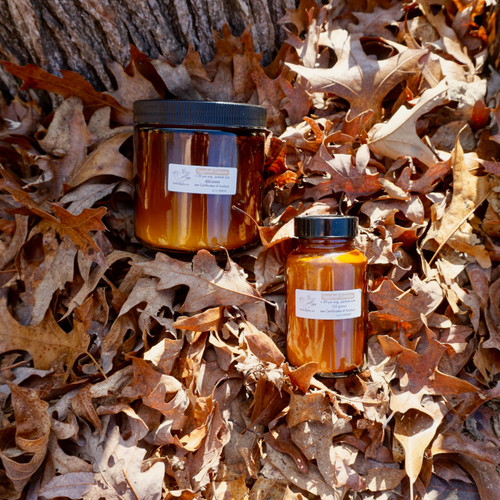
[edit]For those avoiding dairy, pulverized eggshell powder is a calcium source: about 2 tablespoons per day of finely ground eggshell powder incorporated into sauces, seasonings, and flour.[14] Eggshells are roughly 40% calcium by weight, making this a practical, forageable calcium supplement for dairy-free diets. See Egg § Eggshell calcium for the recipe and the absorption/bioavailability research.
References
[edit]- ↑ 1.00 1.01 1.02 1.03 1.04 1.05 1.06 1.07 1.08 1.09 1.10 1.11 1.12 1.13 1.14 1.15 1.16 Ray Peat, "Calcium and Disease: Hypertension, Organ Calcification, and Shock, vs. Respiratory Energy," raypeat.com.
- ↑ Calcium and Disease: Hypertension, organ calcification, & shock, vs. respiratory energy, Ray Peat newsletter
- ↑ Calcium and Disease: Hypertension, organ calcification, & shock, vs. respiratory energy, Ray Peat newsletter
- ↑ Ray Peat, "Milk in context: allergies, ecology, and some myths," raypeat.com.
- ↑ Ray Peat, "Ask the Herb Doctor: The Precautionary Principle (Part 2)", KMUD
- ↑ Ray Peat, "Sleep and Aging", Ray Peat's Newsletter
- ↑ Anderson JJB, Kruszka B, Delaney JAC, et al. "Calcium Intake From Diet and Supplements and the Risk of Coronary Artery Calcification and its Progression Among Older Adults: 10-Year Follow-up of the Multi-Ethnic Study of Atherosclerosis (MESA)," J Am Heart Assoc. 2016;5(10):e003815. doi:10.1161/JAHA.116.003815. PMID 27729333.
- ↑ Ray Peat, "Bone Density: First Do No Harm," raypeat.com.
- ↑ Hilpert KF, West SG, Bagshaw DM, et al. "Effects of dairy products on intracellular calcium and blood pressure in adults with essential hypertension," J Am Coll Nutr. 2009;28(2):142-149. PMID 19828899.
- ↑ Ray Peat, "Ask the Herb Doctor: Cellular Repair", KMUD
- ↑ Ray Peat, "Ask the Herb Doctor: Cellular Repair", KMUD
- ↑ Rheaume-Bleue, K. (2011). Vitamin K2 and the calcium paradox. John Wiley & Sons.
- ↑ Zhong Z, Wheeler MD, Li X, et al. "L-Glycine: a novel antiinflammatory, immunomodulatory, and cytoprotective agent," Curr Opin Clin Nutr Metab Care. 2003;6(2):229-240. PMID 12589194.
- ↑ Ray Peat HubblyBubbly Emporium (@RayPeatHeadShop), "Eggshell powder as calcium source," X/Twitter, 2026.